Scientific evidence is essential for effective public health and environmental policy, yet it often struggles to inform decision-making in practice. Complexity, uncertainty, and competing interests can hinder the use of science in policy processes, particularly when prevention is at stake.
Altertox supports scientific and research communities, public authorities in navigating these challenges by strengthening the science-policy interface and enabling informed, preventive action.
2014 Award Recognition
Altertox was recognised for its pioneering work at the science–policy interface.
Policy Engagement & Regulatory Impact
High-Level EU & Stakeholder Engagement
We conduct engagements with Members of the European Parliament (MEPs), parliamentary offices, political advisers, NGOs, trade associations, scientific experts, and EU policymakers to support dialogue on emerging regulatory and scientific issues.
We organise multiple events at the European Parliament focused on life sciences research and innovation, bringing together policymakers, researchers, industry representatives, and civil society stakeholders to promote evidence-based policy discussions.
Legislative & Regulatory Contributions
Contributed expertise to major EU legislative and regulatory files, including:
MFF
EU Biotech Act
Detergents Regulation
Classification, Labelling and Packaging (CLP)
Pharmaceutical Package
EU Beating Cancer Plan
Resolution on phasing out animal testing in the EU
REACH & CLP consultations
…
Science-Based Policy Leadership
Through sustained engagement with EU institutions, researchers, industry stakeholders, and civil society organizations, we strengthened the visibility of science-based approaches within the European policy landscape.
Our activities contributed to informed dialogue on innovation, public health, and alternatives to animal testing across multiple EU policy initiatives.
Turning Science into Actionable Policy
What We Do
We design and facilitate science–policy processes, structure dialogue between scientists, policymakers and civil society, and help make complex evidence usable for decision‑making.
Who We Work With
Scientific and research communities
Policymakers and public authorities
Civil society organisations
Stakeholders in health & environmental safety policy
AI IN HUMAN HEALTH
(VIRTUAL HUMAN TWIN)
Why? AI adoption in EU healthcare sits at just 11%, far from the 75% target. The digital twins market is projected to reach $21B by 2028, raising the economic stakes.
How? AI can transform personalized medicine and clinical trials, but needs legislative backing, notably the EHDS and MDR, to unlock EU competitiveness without falling behind global rivals.
Who? The EU Virtual Human Twin consortium (~100 organizations) is ready to lead. Yet policy lags technology. With 29% of young EU citizens prioritizing healthcare access, alignment is urgent.
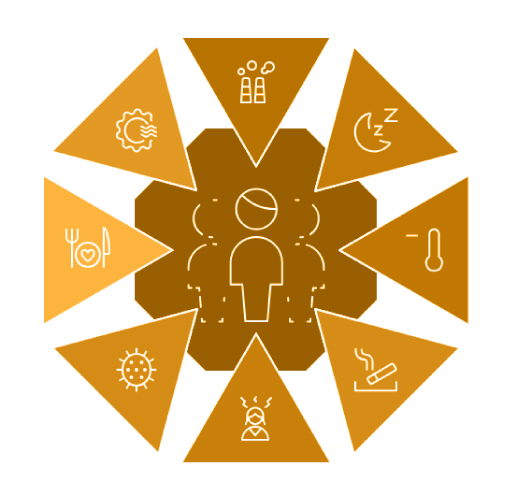
Altertox has a strong expertise in environmental health and the exposome approach, which considers the totality of environmental exposures across the life course.
Beyond research, Altertox plays an active role in structuring the science–policy interface around the exposome by building and coordinating the Exposome Alliance, a platform that brings together scientists, policymakers and civil society actors to advance prevention-oriented policies.
Why? 70% of the ~100,000 chemicals on the EU market are poorly assessed for safety, while their volume keeps growing. Animal testing alone cannot keep pace.
How? New Approach Methodologies (NAMs), including in vitro, in silico, omics, and read-across, can break the bottleneck. Regulatory science must also focus on adverse outcome pathways, systemic toxicity, and simplified risk assessment.
Who? The ASPIS cluster unites three H2020 projects (ONTOX, PrecisionTox, RISK-HUNT3R), representing 70+ institutions across 16 countries and the US, backed by €60M to deliver animal-free, reliable chemical safety assessment.
We use cookies to ensure that we give you the best experience on our website. If you continue to use this site we will assume that you are happy with it.